Warning!
Shop Banner

Small Kine Farm

Organic Mushroom Compost from Waimānalo, Oahu
Waimanalo, HI 96795, USA
0 Sales 0 (0)

Announcement

Small Kine Farm is Oahu's organic mushroom farm, tucked under the Ko'olau cliffs in Waimānalo. Founder Fung Yang started it in 2011 as an offshoot of his green-waste recycling business: the tree trimmings and organic material his crews collected made such good compost that it turned out to be perfect for growing mushrooms. Small Kine Farm became Hawai'i's first commercial portabella grower, supplying Tūtū and Keiki Portabellas to island restaurants and farmers markets.

Nothing goes to waste here. Island green waste is composted and pasteurized, mushrooms are grown on it, and once the harvest is done the spent substrate becomes a rich, ready-to-use organic soil amendment. That is what we sell here on FarmToYou.

USDA Certified Organic farm and a Hawai'i Department of Health permitted composting facility.

Pickup in Waimānalo. Bags are heavy, so orders are local pickup only. We will contact you after you order to arrange a time. Questions or large orders: call 808-262-2724.

Business category

Farm

Location

Social Links

What is spent mushroom substrate (SMS)?

It is the compost our organic portabellas grow in. We build it from pasteurized island green waste, peat moss, chicken manure, agricultural lime and gypsum. After the mushroom harvest the substrate is still rich in organic matter, slow-release nutrients and live mushroom mycelium, so we bag it as a soil amendment instead of wasting it.

Is it certified organic?

Small Kine Farm is a USDA Certified Organic farm and a Hawaii Department of Health permitted composting facility.

Will it bring weeds or pests into my garden?

No. Before the compost leaves the production house, the whole house is pasteurized to eliminate pests, pathogens and weed seeds.

What can I use it for?

Vegetable gardens, flower beds, turfgrass, landscaping and vermiculture feedstock. It works as a soil conditioner, improving moisture retention, aeration and soil structure, and as a compost inoculant: the active mycelium kickstarts decomposition in compost piles.

How much should I apply?

For new beds, lawns and landscape areas, spread it evenly 1 to 3 inches thick and work it into the soil below before you seed or plant (Penn State guidance is 3 to 9 cubic yards per 1,000 square feet). One 0.5 cubic foot bag covers about 6 square feet at 1 inch deep, or about 2 square feet at 3 inches.

Is mushroom compost too salty for plants?

Penn State research found that quality mushroom compost does not carry soluble salts high enough to stop turfgrass seed germinating or to damage existing turf. Working it into the soil dilutes salts further, and rain or irrigation leaches them out of the root zone.

How does pickup work?

All orders are picked up at the farm in Waimanalo, Oahu. After you order we will contact you to arrange a pickup time. Each bag is 0.5 cubic feet, so bring a vehicle that fits your order.

Do you sell wholesale?

Yes. Wholesale is $5 per bag with a 60 bag minimum, for farms, landscapers, nurseries and community gardens. Order the wholesale listing in our store, or call 808-262-2724 for larger volumes.

Our story

From island green waste to organic soil

Small Kine Farm sits in the back of Waimanalo, under the Ko'olau cliffs. Fung Yang founded it in 2011 as an offshoot of his green-waste recycling business, Oahu Community Recycling. He noticed how much of what gets thrown away is organic, and that the compost his crews made from it was exactly what mushrooms like to grow in.

After a USDA research grant in 2009, Small Kine Farm became Hawaii's first commercial portabella producer. Its Tutu and Keiki Portabellas have been served at Roy's Ko Olina, Alan Wong's, Town and the Pacific Club, and sold at farmers markets across Oahu.
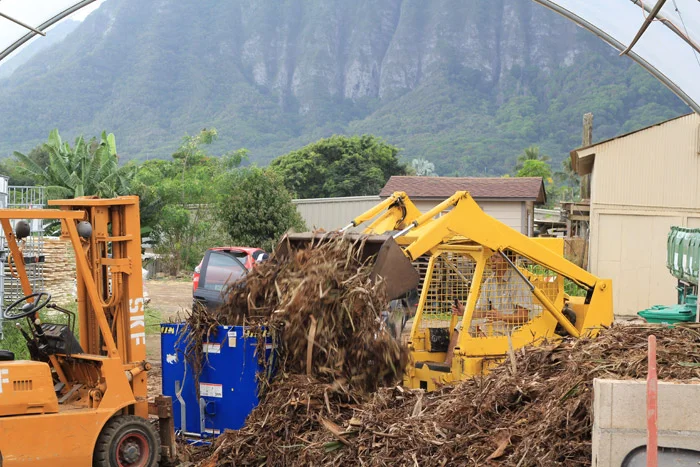
Green waste being loaded for composting at Small Kine Farm, Waimanalo

"Organic waste is a natural resource." Fung Yang, Small Kine Farm

A loop where nothing goes to waste

1

Collect

Tree trimmings and green waste from around Oahu that would otherwise head to the landfill.

2

Compost and pasteurize

Blended with peat moss, chicken manure, agricultural lime and gypsum, then composted and pasteurized.

3

Grow

Our certified organic portabellas grow on that compost.

4

Back to the soil

After harvest, the spent substrate is bagged as organic mushroom compost for gardens and farms.
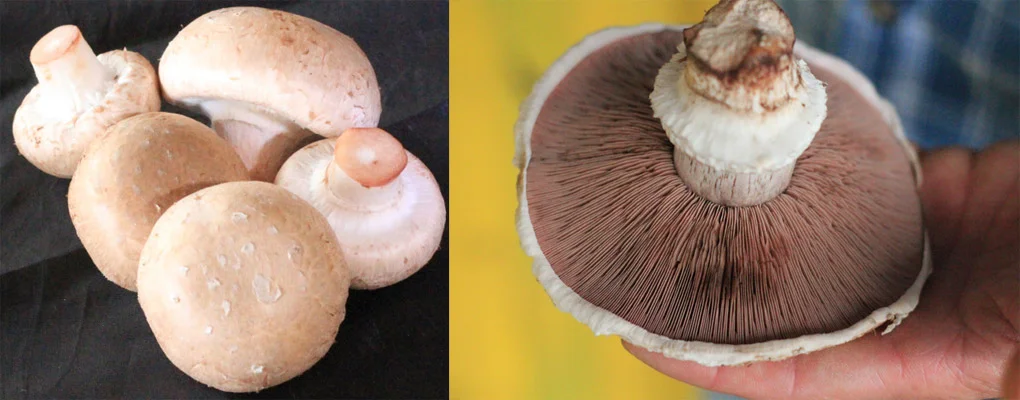
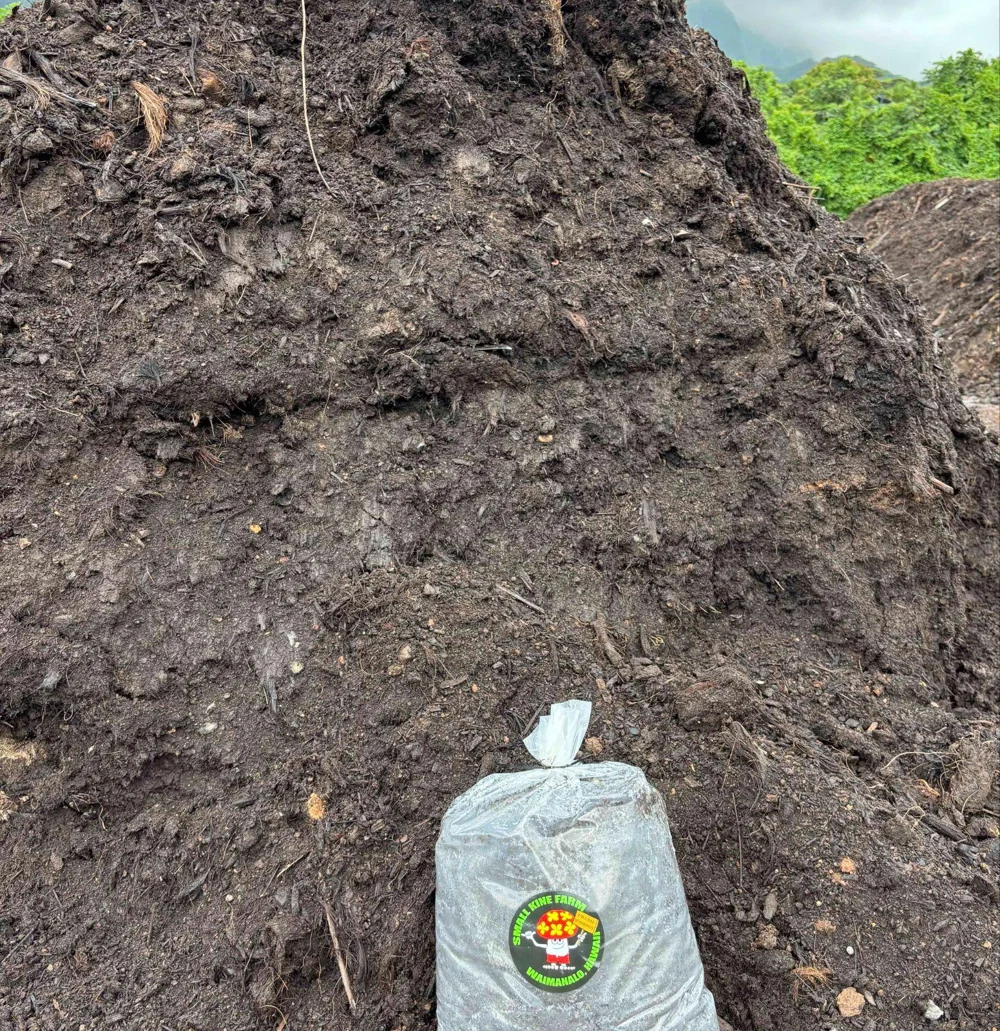
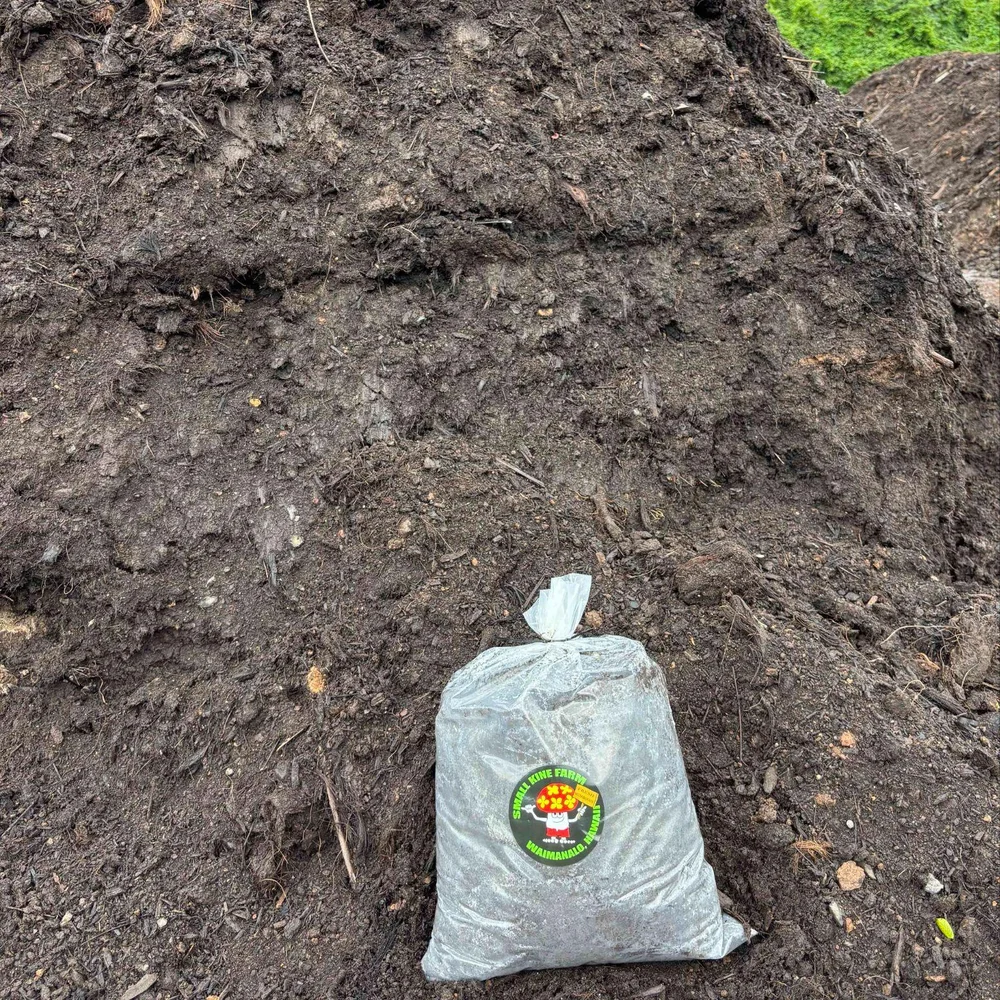
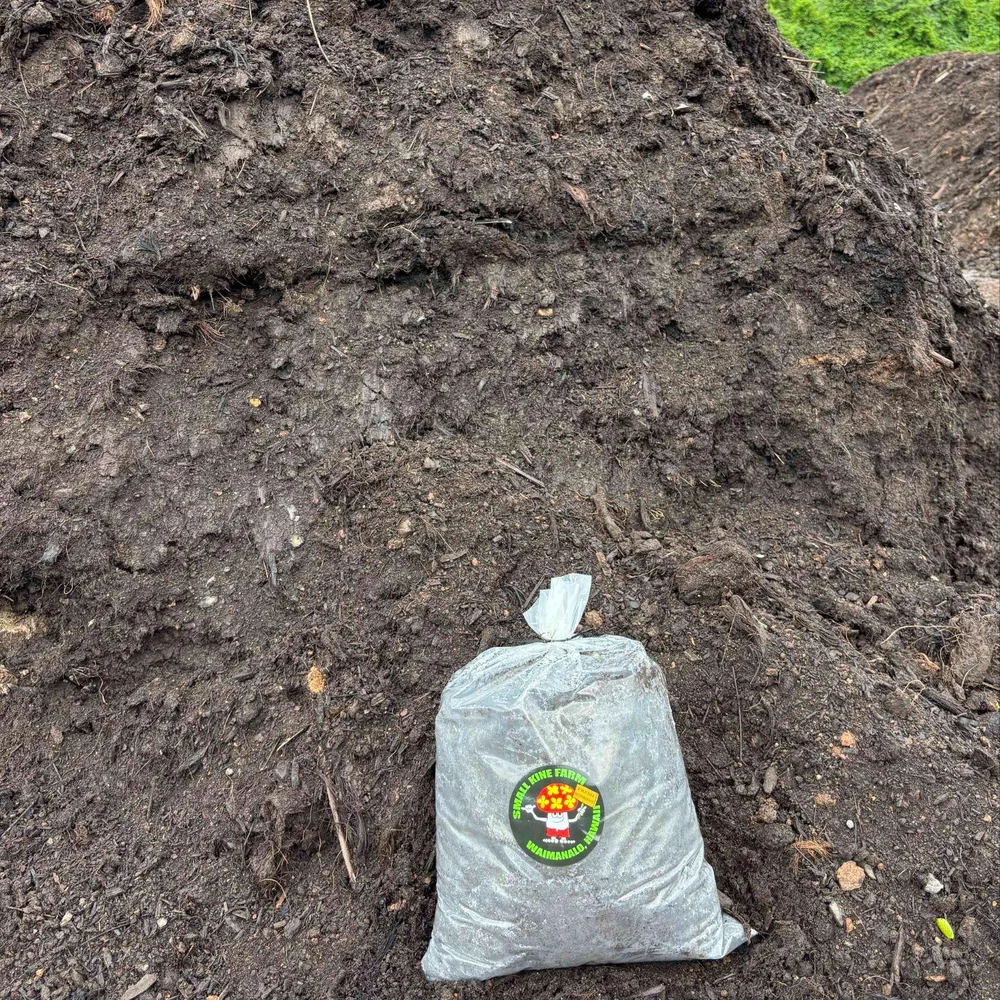
Keiki and Tutu Portabella mushrooms grown at Small Kine Farm Spent mushroom compost pile with a Small Kine Farm bag

Our mission

Learning from nature. Mirroring ecosystems by promoting biodiversity, reusing underutilized resources and growing organic produce to better the community.

Small Kine Farm is a USDA Certified Organic farm and a Hawaii Department of Health permitted composting facility.

In the news

  • Honolulu Star-Advertiser: Waimanalo's Small Kine Farm fosters a zero-waste growing cycle
  • Honolulu Magazine: Farm Friday, Small Kine Farm in Waimanalo
  • MidWeek: A small farm's answer to the high cost of imported mushrooms
  • Hana Hou: Native Intelligence
  • Down to Earth: Small Kine Farms, organic mushrooms help avoid waste

Put island green waste to work in your garden. Our organic mushroom compost is available for pickup in Waimanalo.

Shop compost, $10 a bagWholesale, 60 bags

Grower's guide

Using organic mushroom compost

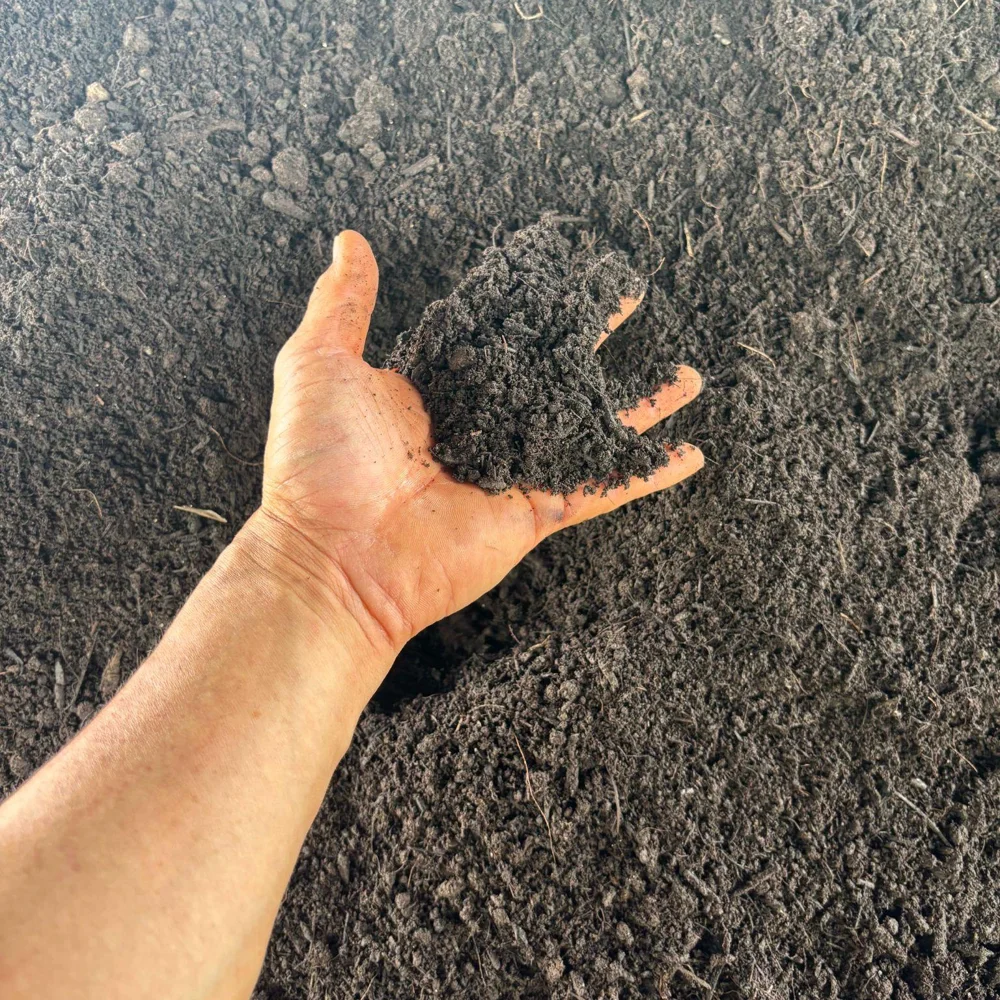
Spent mushroom substrate (SMS) is the compost left after our organic portabella harvest. It looks like dark topsoil, has a loose crumbly structure and an earthy smell, and it is widely used for gardening, vegetable production and weed control.

What's in ours: pasteurized green waste, peat moss, chicken manure, agricultural lime, gypsum and residual mushroom mycelium, built from organic materials unique to Hawaii's island environment.

A handful of Small Kine Farm organic mushroom compost

Why growers use it

  • Soil conditioner. Improves moisture retention, aeration and soil structure. Compost loosens clay soils, reduces crusting and compaction, improves drainage and boosts beneficial soil microbes.
  • Slow-release nutrition. High organic matter, with nitrogen in a mostly organic form that becomes available to plants slowly.
  • Compost inoculant. The active mushroom mycelium kickstarts decomposition in compost piles.
  • Weed-free. The production house is pasteurized before the compost comes out, eliminating pests, pathogens and weed seeds.

Typical mushroom compost analysis

Organic matter25%Moisture58%
Nitrogen (N)1.12%Phosphate (P)0.67%
Potash (K)1.24%Calcium2.29%
Magnesium0.35%Iron1.07%
pH6.6Carbon to nitrogen13:1

Averages for mushroom compost from Penn State University research, on a wet volume basis. They are a general guide, not a lab test of a specific batch. A pH of 6.0 to 7.0 suits most plants, and a carbon to nitrogen ratio under 30:1 points to a mature, stable compost.

How to apply it

  • New beds, lawns and landscaping: spread evenly 1 to 3 inches thick and work it into the soil below, then seed or plant and water thoroughly. That is about 3 to 9 cubic yards per 1,000 square feet.
  • How far a bag goes: one 0.5 cubic foot bag covers about 6 square feet at 1 inch deep, or about 2 square feet at 3 inches.
  • Compost piles: mix it in to inoculate the pile with active mycelium.
  • Worm bins: use it as vermiculture feedstock.
  • Slopes: on steep sites, erosion blankets or netting help hold the soil while plants establish.
Pile of spent mushroom compost at Small Kine Farm Green waste composting at Small Kine Farm

$10 per 0.5 cubic foot bag, or $5 per bag wholesale with a 60 bag minimum. Pickup in Waimanalo, Oahu; we will contact you after you order to arrange a time.

Buy by the bagBuy wholesale

Newsletter

Subscribe to our new channel to get latest updates